



Discover the Taj Mahal, Mughal Grandeur & Timeless Architectural Wonders
Situated along the banks of the Yamuna River in Uttar Pradesh, Agra is one of India's most celebrated heritage destinations, renowned for the magnificent Taj Mahal, grand Mughal forts, historic gardens, and exceptional architectural craftsmanship. Once a major centre of the Mughal Empire, Agra preserves centuries of imperial history through its marble mausoleums, imposing sandstone monuments, intricate decorative arts, and traditional neighbourhoods. From the breathtaking beauty of the Taj Mahal to the royal courtyards of Agra Fort, the city offers an unforgettable journey into India's architectural and cultural heritage.
Agra is home to three UNESCO World Heritage Sites: the Taj Mahal, Agra Fort, and Fatehpur Sikri. These outstanding monuments reflect the artistic achievements, political influence, and architectural innovations of the Mughal period. The city also forms an essential part of India's famous Golden Triangle tourist circuit, connecting Delhi, Agra, and Jaipur.
Beyond its world-famous monuments, Agra offers beautiful riverside viewpoints, historic markets, traditional marble inlay workshops, and distinctive local cuisine. Visitors can explore centuries-old gardens, discover lesser-known Mughal tombs, enjoy heritage walks, and learn about the skilled artisans who continue to preserve the city's decorative traditions.
Whether you are planning a family holiday, a romantic getaway, a cultural exploration, or a short trip from Delhi, Agra offers a memorable combination of history, architecture, craftsmanship, and authentic local experiences.
Agra is one of India's most important cultural destinations because of its extraordinary collection of Mughal monuments and the historical stories associated with them. The city's attractions provide insight into the lives of emperors, royal families, craftsmen, and communities who shaped its development over several centuries.
The Taj Mahal remains Agra's most recognisable landmark, attracting travellers from around the world with its elegant white marble architecture and remarkable symmetry. Nearby Agra Fort reveals another aspect of Mughal history through its massive defensive walls, audience halls, royal chambers, and beautiful palace structures.
Visitors can also explore Fatehpur Sikri, the former imperial capital established by Emperor Akbar, and discover historic sites such as Itmad-ud-Daulah's Tomb, Akbar's Tomb at Sikandra, and Mehtab Bagh.
Agra is not simply a destination for visiting the Taj Mahal. Its traditional markets, marble craftsmanship, historic gardens, and regional food culture offer additional experiences that make the city worth exploring at a relaxed pace.
The Taj Mahal is Agra's most famous attraction and one of the world's most admired monuments. Commissioned by Mughal Emperor Shah Jahan in memory of his wife Mumtaz Mahal, this magnificent white marble mausoleum stands beside the Yamuna River and represents an exceptional achievement of Mughal architecture.
Construction began in the 17th century, bringing together skilled artisans, stone carvers, calligraphers, and craftsmen who created the monument's distinctive decorative features.
The Taj Mahal is celebrated for its harmonious proportions, elegant marble dome, four surrounding minarets, intricate floral inlay work, and beautifully arranged gardens.
Visitors enter through a monumental gateway before discovering the impressive central mausoleum framed by reflecting pools and landscaped pathways. The symmetry of the complex creates striking views from different perspectives, while the changing daylight alters the appearance of the marble exterior.
Early morning is particularly popular for photography, as softer light and relatively peaceful surroundings can enhance the experience.
The monument is generally closed to tourists on Fridays, so travellers should plan their itinerary accordingly.
Beyond its romantic association, the Taj Mahal offers an opportunity to appreciate the artistic techniques, architectural planning, and craftsmanship of the Mughal era.
Agra Fort is another outstanding heritage landmark that reveals the city's importance as a centre of Mughal power.
Located near the Yamuna River, this enormous fortified complex was extensively rebuilt under Emperor Akbar during the 16th century and later developed by successive Mughal rulers.
Its massive red sandstone walls surround an impressive collection of palaces, courtyards, audience halls, and residential chambers.
Visitors can explore notable structures such as Jahangir Mahal, Diwan-i-Aam, Khas Mahal, and Musamman Burj, depending on current public access.
The architecture reflects a fascinating combination of defensive construction and refined royal design. Red sandstone buildings stand alongside elegant marble structures, demonstrating the architectural preferences of different emperors.
Agra Fort is also closely associated with Shah Jahan, who spent his final years confined within the fort under the rule of his son Aurangzeb.
From selected areas of the complex, visitors can admire views towards the Taj Mahal across the Yamuna River.
Exploring Agra Fort provides valuable historical context for understanding the city's imperial past and its connection with the Taj Mahal.
Located approximately 36–40 kilometres from Agra, Fatehpur Sikri is one of India's most remarkable examples of Mughal urban planning and monumental architecture.
Established by Emperor Akbar during the 16th century, the city served as the Mughal imperial capital for approximately fourteen years before the royal court relocated.
Today, Fatehpur Sikri is recognised as a UNESCO World Heritage Site and attracts visitors with its beautifully preserved red sandstone buildings, grand courtyards, religious monuments, and elaborate gateways.
The magnificent Buland Darwaza is among its most recognisable structures, rising prominently above the surrounding complex.
Other important attractions include Panch Mahal, Diwan-i-Khas, Jama Masjid, and the white marble tomb of Sheikh Salim Chishti.
The site reflects a distinctive combination of architectural traditions, including elements influenced by Persian, Islamic, and Indian design.
A visit to Fatehpur Sikri allows travellers to explore the ambitions of Emperor Akbar and understand how architecture, religion, and imperial administration influenced the development of the Mughal Empire.
For visitors planning a longer Agra itinerary, Fatehpur Sikri is a rewarding half-day excursion that complements sightseeing at the Taj Mahal and Agra Fort.
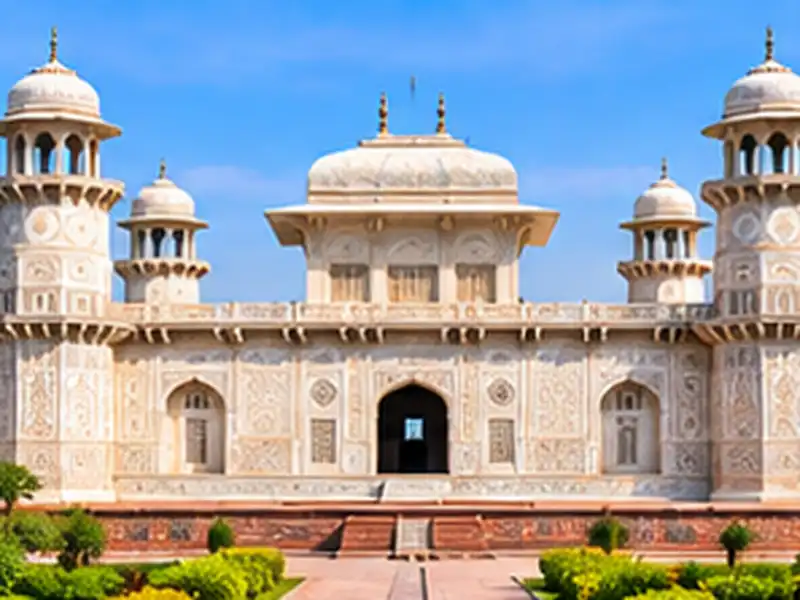
Agra's architectural heritage extends beyond its three UNESCO World Heritage Sites. One of its most beautiful lesser-known monuments is the Tomb of Itmad-ud-Daulah, often referred to as the Baby Taj.
Situated along the Yamuna River, this elegant mausoleum was commissioned by Empress Nur Jahan in memory of her father, Mirza Ghiyas Beg.
Constructed during the early 17th century, the monument is admired for its refined white marble surfaces, delicate lattice screens, intricate floral patterns, and decorative stone inlay work.
Its architectural details reflect an important period in the development of Mughal funerary architecture, preceding the construction of the Taj Mahal.
Unlike Agra's busiest tourist attractions, Itmad-ud-Daulah's Tomb often offers a more peaceful setting for appreciating decorative craftsmanship.
The surrounding gardens and riverside location add to its appeal, particularly for photography and heritage sightseeing.
Travellers interested in the artistic evolution of Mughal monuments will find this site especially rewarding.
Mehtab Bagh is a historic Mughal garden situated across the Yamuna River from the Taj Mahal. Its location provides one of the most recognisable views of the famous marble monument from the opposite riverbank.
The garden is associated with the Mughal tradition of carefully arranged landscapes, geometric pathways, and scenic waterfront settings.
Visitors can explore the garden while admiring the Taj Mahal rising above the river and surrounding greenery.
Late afternoon is particularly attractive for photography, when warm sunlight falls across the monument and the nearby landscape.
Mehtab Bagh also provides an alternative perspective on the architectural relationship between the Taj Mahal, the Yamuna River, and the surrounding gardens.
For couples, photographers, and travellers seeking a quieter sightseeing experience, the garden offers a memorable addition to an Agra itinerary.
The surrounding riverfront scenery may vary with seasonal water levels, weather, and local environmental conditions.
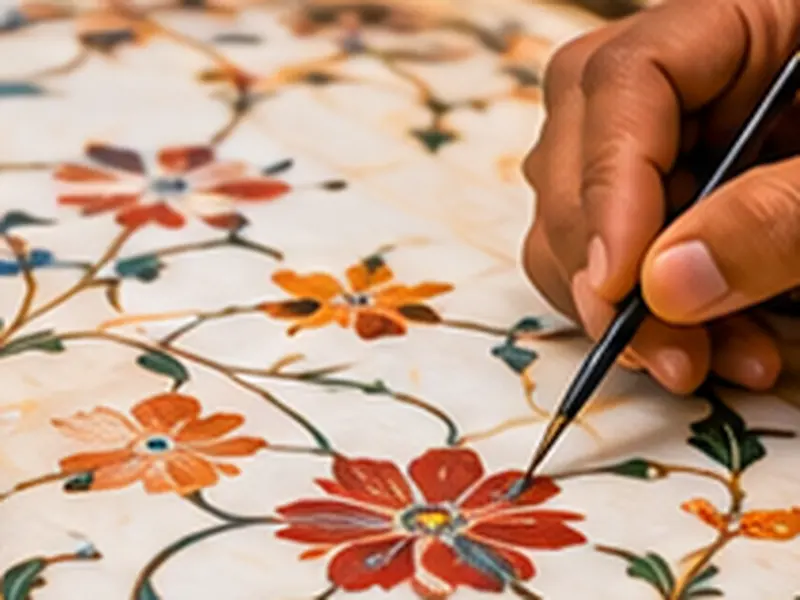
Agra has a longstanding reputation for fine craftsmanship, particularly marble inlay work inspired by the decorative techniques used in Mughal architecture.
Known as pietra dura or parchin kari, this technique involves carefully cutting coloured stones and fitting them into marble surfaces to create intricate floral and geometric patterns.
The Taj Mahal is one of the most celebrated examples of this artistic tradition, but the craft continues in workshops throughout Agra.
Visitors can explore selected artisan workshops to observe stone cutting, polishing, and inlay techniques.
Local craftsmen produce decorative plates, tabletops, boxes, and other marble objects using designs inspired by traditional Mughal patterns.
Agra is also known for leather goods, carpets, embroidery, jewellery, and regional handicrafts.
These artistic traditions provide insight into the connection between the city's historical monuments and its present-day cultural identity.
Travellers interested in purchasing handcrafted products should compare workmanship, materials, and prices before making a purchase.
Agra's traditional markets provide an opportunity to explore the city's lively commercial atmosphere beyond its famous heritage monuments.
Kinari Bazaar, located near the historic city area, is known for decorative goods, traditional clothing, jewellery, fabrics, and wedding accessories.
Its narrow streets and busy shops create a colourful shopping environment that reflects the everyday commercial life of Agra.
Sadar Bazaar is another popular area for visitors, offering handicrafts, leather products, clothing, souvenirs, and local food outlets.
Travellers can explore shops selling marble-inspired decorative items, embroidered fabrics, footwear, and regional gifts.
The markets also provide opportunities to experience local street food and observe the different communities and businesses that contribute to Agra's cultural character.
Exploring these areas is particularly enjoyable for travellers interested in photography, shopping, and authentic city experiences.
Agra's culinary culture reflects its historical association with the Mughal Empire and the wider food traditions of northern India.
The city is known for rich Mughlai preparations featuring aromatic spices, slow-cooked gravies, breads, and traditional cooking techniques.
Visitors can explore dishes such as kebabs, korma, biryani, and various vegetarian and non-vegetarian Mughlai specialities at established restaurants.
Agra is particularly famous for petha, a traditional sweet prepared from ash gourd. Available in several flavours and varieties, petha is one of the city's most recognisable food products and a popular souvenir.
Another local favourite is bedai with spicy potato curry, often enjoyed as a traditional breakfast.
Street-food enthusiasts can discover kachori, jalebi, chaat, and other North Indian snacks in the city's markets and food streets.
Exploring Agra's cuisine adds a memorable cultural experience to a holiday focused on monuments and historical sightseeing.
Agra forms an essential part of India's Golden Triangle route, which connects three major tourism destinations: Delhi, Agra, and Jaipur.
This popular circuit allows travellers to explore a fascinating combination of Mughal architecture, Rajput heritage, colonial landmarks, and traditional Indian culture.
Delhi offers historic monuments, museums, and lively markets, while Agra provides an opportunity to visit the Taj Mahal and other outstanding Mughal sites.
Jaipur completes the journey with its magnificent forts, royal palaces, colourful bazaars, and Rajasthani cultural traditions.
Agra's road and railway connections make it convenient to include in both short Golden Triangle trips and longer North India holidays.
Travellers can also combine Agra with nearby destinations such as Mathura, Vrindavan, and Fatehpur Sikri, depending on their interests and available time.
Its central position along major travel routes makes Agra an excellent destination for first-time visitors to northern India.
Agra offers a wide range of experiences for travellers with different interests.
Couples can enjoy the romantic atmosphere of the Taj Mahal, peaceful garden walks, beautiful riverside viewpoints, and heritage-inspired accommodation.
Families can explore historic forts, royal monuments, museums, and traditional markets while learning about India's Mughal history.
Architecture enthusiasts can discover the intricate craftsmanship of marble mausoleums, sandstone palaces, ornamental gateways, and historic gardens.
Photographers will find memorable opportunities to capture the Taj Mahal from different viewpoints, observe decorative architectural details, and document lively market scenes.
Food enthusiasts can explore Mughlai cuisine and regional sweets, while cultural travellers can visit craft workshops and heritage neighbourhoods.
Agra is suitable for short city breaks as well as longer heritage-focused itineraries through Uttar Pradesh and Rajasthan.
A one-to-two-day stay is generally sufficient for exploring Agra's major attractions, including the Taj Mahal, Agra Fort, Itmad-ud-Daulah's Tomb, and Mehtab Bagh.
Travellers planning a visit to Fatehpur Sikri, Akbar's Tomb at Sikandra, and additional heritage sites may prefer two to three days.
October to March is generally the most comfortable period for sightseeing, with cooler temperatures suitable for walking around monuments and gardens.
December and January can bring cold mornings and dense fog, which may occasionally reduce visibility around the Taj Mahal and affect road or railway journeys.
April to June is typically very hot, so early-morning sightseeing and indoor breaks are advisable. July to September receives monsoon rainfall, bringing occasional greenery and cloudy conditions.
Visitors should book monument tickets through authorised channels, wear comfortable walking shoes, carry drinking water, and check current entry regulations before sightseeing.
The Taj Mahal is closed for general tourism on Fridays, making it particularly important to plan the order of monuments when visiting Agra on a short itinerary.
The city is connected by major railways, highways, and limited commercial air services, with Delhi also serving as a convenient arrival point for travellers coming from distant destinations.
With its extraordinary Mughal monuments, elegant gardens, beautiful marble craftsmanship, traditional food, and fascinating imperial history, Agra remains one of India's most rewarding destinations for cultural and architectural exploration.






Explore more beautiful destinations in Uttar Pradesh.
Explore more Agra and Uttar Pradesh travel experiences.


Plan a memorable getaway with Travel Ride.
Helpful answers about Agra.
The long stretch of October to April throughout the colder time of year is the best and ideal opportunity to investigate Agra. As the temperature empowers the guests to walk easily in Agra and around. Agra observes winters in November that endures till February. Then again, summers can be very awkward and agitating for guests to visit Agra during this season, consequently should be best dodged. The hour of the visit will surely rely upon one's decision in any case.
Most Foreign tourists are having Agra on their travel list while traveling to India. It is located at a distance of 200km from Delhi, the capital city of India. Other places that are located around Agra are Dholpur, Bharatpur, Mathura, Vrindavan, Gwalior, Alwar, Jaipur and Jim Corbett.
There are different railway stations, for example, Agra Cantt, Agra Fort, and Agra Railway stations. Agra is associated with Delhi, Jaipur, and Kanpur, and so on there are different neighborhood prepares, for example, Malwa Express, Bhopal Express, Punjab Mail, Sampark Kranti, and so on that work consistently.
In Agra, you can have a view of the World’s wonders and also some other tombs and palaces that were constructed by the Mughal empire during their rule. Some of the magnificent attractions of Agra are the Taj Mahal, Fatehpur Sikri, Agra Fort, Itimad-ud-Daulah’s Tomb, Mehtab Bagh, Akbar’s Tomb, Chini Ka Rauza and Wildlife SOS.
The closest International air terminal is a ways off 220 km which is Indira Gandhi International air terminal, situated in Delhi. From the air terminal, you can get neighborhood transport and taxis to arrive at your objective. There are well-motorable streets that interface Agra with different urban communities.
Agra is famous worldwide for the Taj Mahal which is among the seven wonders of the world. It is often visited as a part of the Golden Triangle with Jaipur and Delhi. This place can be explored in the time frame of 2 days.
As we all know Agra is famous all around the world for the Taj Mahal. This is a UNESCO World Heritage site. Agra has different excellent Mughal gardens. Other than this you can likewise get valid Mughlai food, which is genuinely flavorful and imperial. Petha is the most mainstream sweet that we get in every genuinely delectable shop. Untamed life SOS is likewise the most renowned and significant spot in Agra that plans to secure imperiled natural life species. You can likewise visit the biggest mosques in India that have amazing engineering. Nature sweethearts can likewise appreciate flying creatures watching on the bank of the Chambal River, here you can see more than 250 types of Birds.
Agra observes hot temperatures going from 22°C to 45°C from April to June months. As the remainder of India Agra additionally witnesses winters in the period of November to February when the base temperature comes from 29°C to 8°C. The rainstorm is seen from the long stretch of July to mid-September with temperatures going from 33°C to 25°C.
Shah Market is a discount and retail market situated close to the Sanjay Place market in Agra. Kinari Bazaar is situated in the vicinity of Jama Masjid that is situated in Agra. This is an acclaimed discount market for handiworks made out of mats, calfskin, Marble, china, and different materials. Subhash Bazaar is one of the well-known business sectors in Agra situated close to Halwai Gali which is near Jama Masjid. Here you can get different silk textures and silk sarees.
 Taj Mahal - The Teardrop On The Cheeks Of Eternity
 5 Best places to visit in winter in India
 Top Tourism destinations for your next trip to India
 Go through the glorious past of India with these Historical Destinations in India
 Experience the Luxury of past time in these Seven Luxury Trains in India